Lesson Overview
Curriculum: Phases of the Moon – Kissed By Kiwi
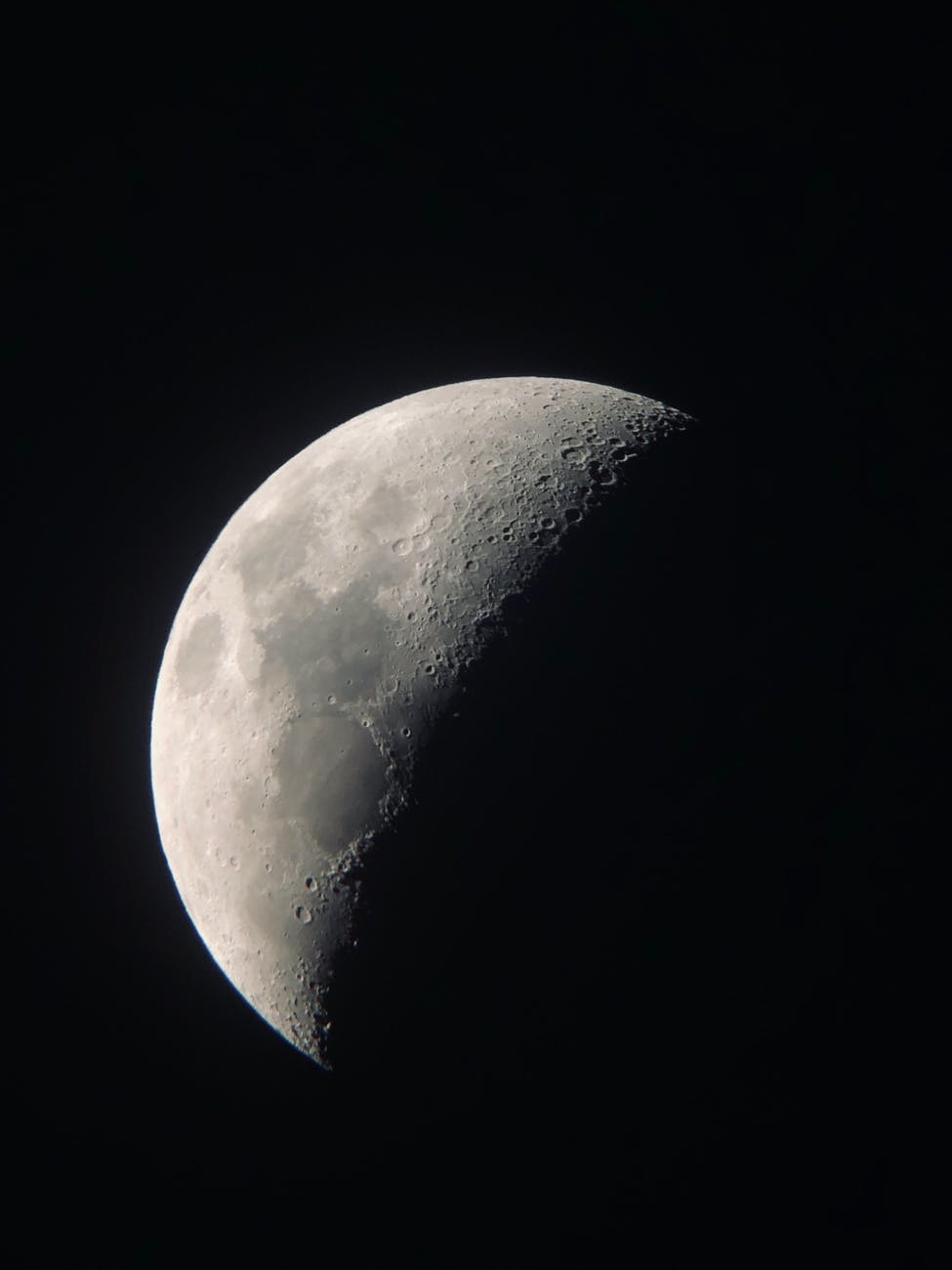
If your children love space or science then this is an excellent hands on curriculum to encourage their love of both. You will do weekly moon and star gazing to track the changes in the lunar cycle. Many of these activities require being outside in the dark of night (a place with low light pollution works best).
Duration: 4 weeks, 5 days a week (10-15 minutes a day)
Difficulty: Easy
Grade Level: Kindergarten, First Grade, Second Grade
Subjects Covered: Science, Art, Math, Language Arts, Engineering, Robotics, Social Studies, Geology
Week 1, Day 1: What Is A Scientist?
Today you will talk about what it means to be a scientist, what tools they use and how we will use those to study the lunar cycle of the moon. Your hands-on activity is to start your own lunar cycle drawings on your Magic Pad and use your 5 senses to think like a scientist. Can you find the big dipper or orion’s belt?
Week 1, Day 2: What Is The Solar System?
Today you will talk about the solar system, the planets and the stars. Your hands on activity is to turn a flashlight into your very own star chart and use it on your bedroom ceiling before bed tonight using black construction paper.
Week 1, Day 3: What Is The Moon?
The moon isn’t like earth, it doesn’t have plants or animals or even as much air as we do on earth! Today we’re going to explore what it’s like on the surface of the earth. Your hands on activity is to make your own surface of the moon using Mad Mattr.
Week 1, Day 4: Stargazing
Tonight you will update your lunar chart. Do you notice any changes from the last time you drew a picture of the moon? Which senses are you using tonight? Let’s make a hypothesis! What will happen if you use your star flashlight outside at night and aim it up into the sky? Now let’s be like a scientist and test and record our results.
Week 1, Day 5: Weekly Review
Let’s review what we learned this week. What is a scientist? What are your five senses? What is a hypothesis? What is a scientist? What is the moon? Compare and contrast the surface of Earth and the Moon using a venn diagram.
Week 2, Day 1: What Is Gravity?
Gravity on the moon is not like gravity on Earth, but wait, what is gravity? Today we’ll explore the concept and see how gravity affects different objects of different sizes and weights. Your hands on activity making a hypothesis and seeing what will hit the ground first.
Week 2, Day 2: A Day On The Moon
What happened if you woke up and you were on the moon instead of in your bedroom? Today you will take a trip to the moon! Your hands on activity is to dress up in a way you think would protect you while you’re on the moon and go on a scavenger hunt.
Week 2, Day 3: What Is An Astronaut?
Now that you’ve spent a day on the moon it’s time to learn about astronauts. What is an astronaut, whom is an astronaut and how could you become one yourself one day? Your hands on activity today is to read Mae Among the Stars and then write about your day on the moon using your five senses.
Week 2, Day 4: Stargazing
It’s time to look at the moon again. Make a hypothesis and predict what changes you think you will see. How can you test your hypothesis? Can you design an experiment to help you test? For today’s hands on activity you will update your lunar chart and draw a space picture on your Magic Pad.
Week 2, Day 5: Weekly Review
Let’s review what we did this week. What is gravity? What would it be like to live on the moon? What is an astronaut? Did your moon drawing change from the week before and if so, why do you think that is? Today your hands on task is to research the first time a person landed on the moon. How would a scientist figure out the answer?
Week 3, Day 1: What Is A Spaceship?
Today you are going to learn about spaceships! Why do you think we need spaceships? What are the different parts of a spaceship and what does the inside of a spaceship look like? Today your hands on activity is to create your own spaceship using MoonToy STEM building blocks!
Week 3, Day 2: How Does A Spaceship Launch?
Gravity is a huge reason it’s hard for us to leave Earth. So how does a spaceship do it? Today you’re going to learn about thrust and propulsion and how a spaceship uses energy to push past the gravity that holds everything to the ground. For your hands on activity you will be launching a foam rocket ship!
Your Hands-On Materials


Week 3, Day 3: How Does A Spaceship Land Safely?
It takes so much force to get the rocket off the ground, so how do astronauts land safely back to Earth? Today you’re going to learn about parachutes and how they work! For your hands on activity you will need to safely land a raw egg from a drop to the ground by building your own basket for your parachute.
Week 3, Day 4: Stargazing
We’re getting close to the end of the month! It’s time to do another drawing of the lunar phase of the moon. Today your hands on activity is to use a flashlight on a blow up moon ball and pretend you are the sun. Can you figure out a way to make shadows change shape on the surface of your pretend moon?
Week 3, Day 5: Weekly Review
Let’s go over everything we learned this week. What is a spaceship? How does it launch and what makes it hard to lift off the ground? Once a spaceship is ready to come back to Earth how does it land safely? Did you figure out anything from your experiment with the flashlight pointed at your “moon” last night? Your hands on activity is to write about how you did trying to land your raw egg safely to the ground. It’s okay if it broke!
Week 4, Day 1: Field Trip
Today you get to go to a space museum! Do you think you will see a spaceship? What else might you find there? Your hands on activity is to take a notebook and draw three things you saw at the museum that you thought were neat, scary, or super interesting.
Week 4, Day 2: What Is A Lunar Rover?
A rover is a vehicle that astronauts use to help them move around faster on the surface of the moon. Today we’ll be learning about the rover and then trying to build our own!
Week 4, Day 3: Finding And Inspecting Rocks
One of the reasons we went to the moon was to study the surface of the planet. Astronauts took pieces of the moon back to Earth for scientists to study. Today our hands on activity is to dig and examine rocks like the scientists did with the rocks on the moon.
Week 4, Day 4: Stargazing
Today we finish our lunar chart and the phases of the moon. Are you surprised by the results? Use a venn diagram to compare and contrast the changes in the different phases of the moon. What causes the moon to change shape over the course of the month? Let’s watch a cool video!
Week 4, Day 5: Weekly Review
We’ve had so much fun learning about the moon and it’s lunar cycles. Today your hands on activity is to use everything you’ve learned to plan a trip to the moon and then blast off and go on a great adventure by exploring the surface of the pretend moon around you. Design a flag you can leave on the surface of the moon to mark your time there. What materials will you need to make for your journey? What does your spaceship and rover look like? What might you find and bring back for other scientists to study? How will you safely land your ship back at home?
Download This Curriculum
Please show your support for this curriculum by purchasing the hands on materials using the links listed above which are designed specifically to enhance and support this month of wonderful learning and hands-on adventures. Affiliate links and your purchases of these materials are how we can offer this curriculum for free.
Download Coming Soon!
 Kissed By Kiwi